
Gallbladder Polyps
Understanding Gallbladder Polyps: Risks, Symptoms, and Treatments
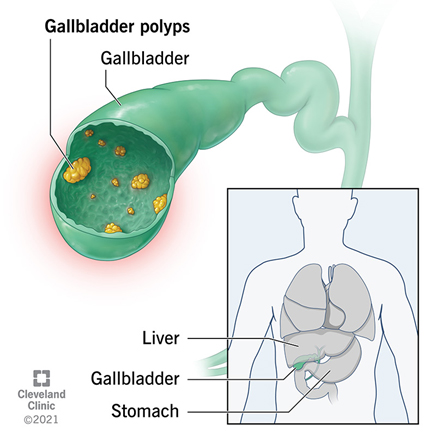
Gallbladder polyps are small growths on the lining of the gallbladder wall. While finding out you have a "growth" can be alarming, the vast majority of these polyps are benign (non-cancerous). Because of the rise in high-resolution imaging, these are being detected more frequently than ever before.
What Exactly Are Gallbladder Polyps?
Most polyps are not true "tumors." They are generally categorized into three groups:
- Pseudo-polyps (Cholesterol Polyps): The most common type. These are actually deposits of cholesterol (cholesterolosis) and are completely harmless.
- Inflammatory Polyps: Small bits of scar tissue or inflammation, often linked to chronic gallbladder issues.
- True Adenomas: These are actual benign tumors. While not cancerous, they have the potential to become malignant over time, which is why monitoring is vital.
- Malignant Polyps: Usually adenocarcinomas. These are rare but become more likely as a polyp grows larger than 1cm.
Symptoms: What Does It Feel Like?
In most cases, gallbladder polyps are "silent." However, if a polyp is located near the gallbladder neck, it can block bile flow, leading to symptoms similar to gallstones:
- Steady pain in the upper right abdomen (Biliary colic).
- Nausea or vomiting, especially after fatty meals.
- Bloating or indigestion.
Important: If you have these symptoms and a polyp is present, your doctor may recommend surgery even if the polyp is small.
Risk Factors: Who is Most at Risk?
While anyone can develop polyps, certain factors increase the likelihood:
- Age: Risk increases for those over age 50.
- Gallstones: People with stones often have concurrent polyps.
- Medical Conditions: Primary Sclerosing Cholangitis (PSC) significantly increases the risk of polyp-related malignancy.
- Metabolic Syndrome: High cholesterol and obesity are linked to cholesterol polyps.
Diagnosis and Monitoring Protocols
Doctors use the size of the polyp as the primary indicator for treatment.
The Monitoring Roadmap
| Polyp Size | Treatment Action | Follow-up Frequency |
|---|---|---|
| < 5mm | Observation | Ultrasound at 12 months; stop if stable. |
| 6mm - 9mm | Observation | Ultrasound at 6 months, then annually for 5 years. |
| 10mm - 20mm | Cholecystectomy | Surgical removal (usually laparoscopic). |
| > 20mm | Major Surgery | Open surgery with liver/lymph node sampling. |
Treatment: Cholecystectomy (Gallbladder Removal)
If a polyp is large or causing pain, the only effective treatment is the removal of the gallbladder.
- Laparoscopic Cholecystectomy: A minimally invasive "keyhole" surgery with a quick recovery time (usually 1–2 weeks).
- Extended Cholecystectomy: Required for very large polyps to ensure no cancer cells have spread to the adjacent liver tissue.
Frequently Asked Questions (FAQs)
Can I dissolve gallbladder polyps with diet?
No. Unlike some gallstones, polyps are attached to the gallbladder wall and cannot be "flushed" out or dissolved with supplements. However, a low-fat diet can help manage symptoms.
Is gallbladder surgery dangerous?
Cholecystectomy is one of the most common surgeries performed worldwide. While all surgery carries risks (infection, reaction to anesthesia), the risk of leaving a potentially cancerous polyp untreated is often higher.
Do polyps always turn into cancer?
No. Less than 5% of all gallbladder polyps are cancerous. The 1cm threshold is a safety margin used by surgeons to prevent cancer before it starts.